
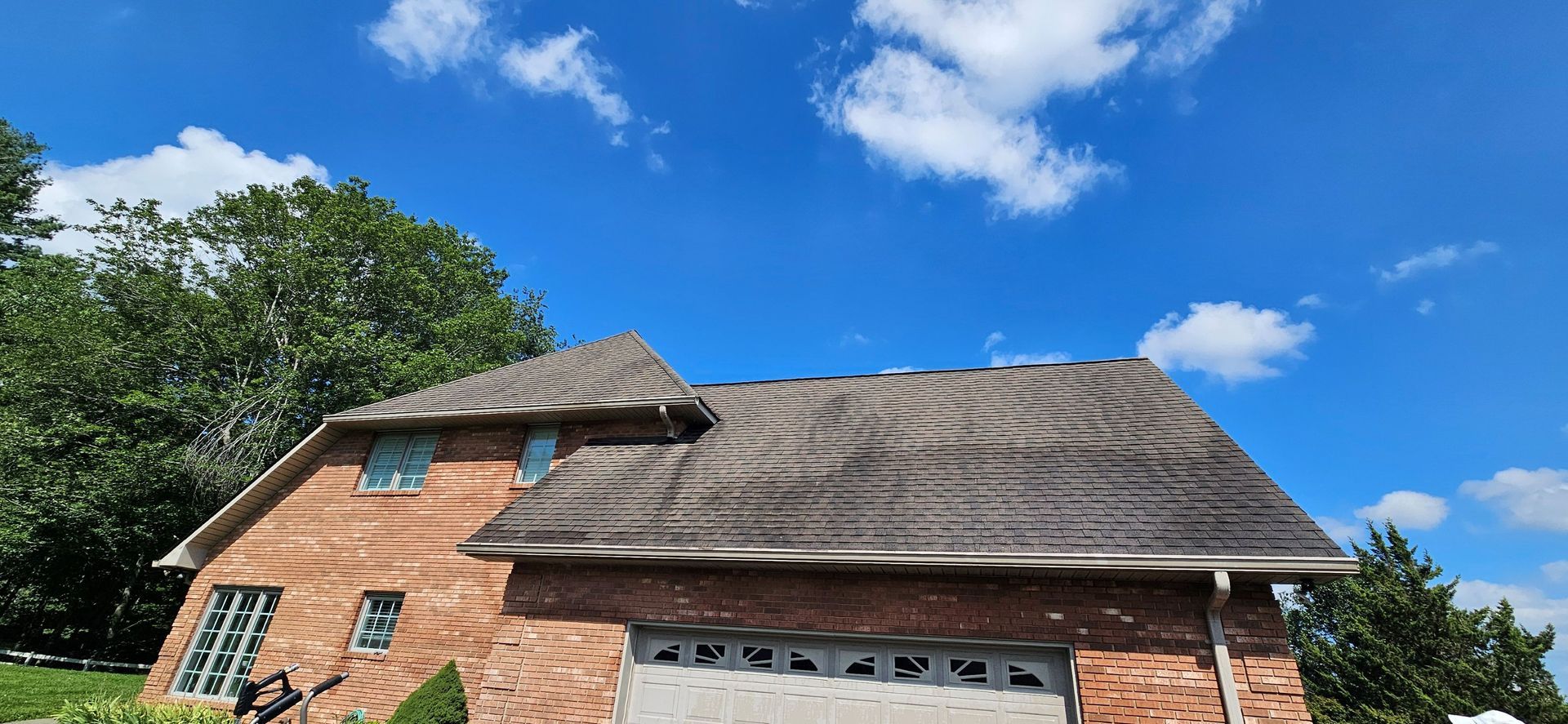
Roofs That Need Chemistry, Not Pressure
Shingle roof cleaning in Marion for asphalt surfaces damaged by lichen, moss, and biological growth
Asphalt shingle roofs throughout Marion are the dominant residential roofing material, and they present a specific cleaning challenge that pressure washing cannot safely address. Outdoor Elements cleans shingle roofs using a chemical-only treatment protocol—no pressure rinse applied to the shingles themselves—because the granule surface that gives asphalt shingles their weather resistance is stripped and loosened by high-pressure water. The result of pressure washing a shingle roof is not a clean surface but a prematurely aged one, with granule loss that shortens the roof's functional life by years.
The cleaning process at Outdoor Elements uses sodium hypochlorite combined with specialty chemicals applied through a Soluforge system, which delivers controlled chemical coverage across the entire roof surface. This approach kills lichen, moss, and algae at the root rather than scrubbing them off mechanically. Lichen is particularly stubborn on older asphalt shingles because its rhizines anchor directly into the granule layer; chemical treatment dissolves that bond without abrading the surface underneath. Because the chemical cost per job is higher than a standard pressure wash, pricing reflects the material cost and the expertise required to apply the right concentration for each roof's condition.
Schedule an on-site evaluation with Outdoor Elements to assess your roof's current growth level and determine the appropriate treatment approach for your shingles.
What Chemical-Only Treatment Actually Accomplishes
When sodium hypochlorite is applied at the correct dilution and dwell time for asphalt shingles, the biological organisms responsible for black streaking, green moss patches, and the crusty grey-white formations of lichen are killed at the cellular level. The treatment is applied to the entire roof plane rather than targeting visible patches only, because lichen and algae colonies establish well beyond their visible edges. A roof that has been treated correctly shows uniform color restoration across the shingle field—not a patchy result where only the most visibly affected areas were addressed.
After treatment, you will notice that the dark streaking caused by Gloeocapsa magma algae fades over a period of days as the dead material rinses away with rainfall. Lichen, which takes longer to release, gradually loosens from the granule surface rather than being forcibly removed. The shingles retain their original texture and granule coverage, which is the observable indicator that the cleaning method did not cause mechanical damage.
The chemical-only protocol also means that adjacent surfaces—gutters, siding, and landscaping near the roofline—require attention during application. Outdoor Elements accounts for runoff control as part of the treatment process, which is a step that separates a careful application from one that causes secondary damage to the property below.
Common Questions About Shingle Roof Cleaning
Homeowners in Marion with asphalt shingle roofs often have specific questions about how chemical cleaning differs from what they have seen pressure washing contractors do, and what to expect during and after the treatment process.
What makes asphalt shingles unsuitable for pressure washing?
Asphalt shingles are surfaced with mineral granules embedded in the asphalt layer, and those granules are what protect the underlying mat from UV degradation. High-pressure water dislodges those granules in measurable quantities, accelerating the aging process and voiding many manufacturer warranties that specify low-pressure cleaning methods only.
How is the Soluforge system different from a standard pump sprayer?
The Soluforge system delivers chemical solution at consistent flow rates and concentrations across varying roof pitches and surface areas, which matters because uneven application leaves sections undertreated and can allow regrowth to begin from those areas within months.
What happens to lichen after the chemical is applied?
Lichen does not disappear immediately; the chemical kills the organism, and the physical crust loosens and separates from the shingle granules gradually over several weeks as the dead tissue dries and normal rain events carry it away.
How does the age of a Marion-area home affect the cleaning approach?
Many residential properties in and around Marion were built during mid-to-late twentieth century construction periods when thicker, three-tab asphalt shingles were standard. Older shingles with existing granule wear require lower chemical concentrations and longer dwell times rather than higher pressure to avoid accelerating existing surface degradation.
What should you look for after the treatment is complete to confirm it was done correctly?
A correctly treated shingle roof shows no granule accumulation in the gutters or on the ground below the drip edge immediately following the service, and the shingle surface retains a uniform matte texture rather than appearing scoured or shiny in any areas.
Outdoor Elements also performs shingle roof cleaning in Wytheville, Abingdon, Bristol, Saltville, Grayson, Atkins, and Chilhowie. To arrange a roof assessment and get a detailed estimate based on your shingle condition and roof size, contact Outdoor Elements at (276) 247-9587.