Oxidation and Lichen Removed Without Damaging the Panel
Metal roof cleaning in Marion for standing seam and corrugated panels showing oxidation, lichen, and biological surface buildup
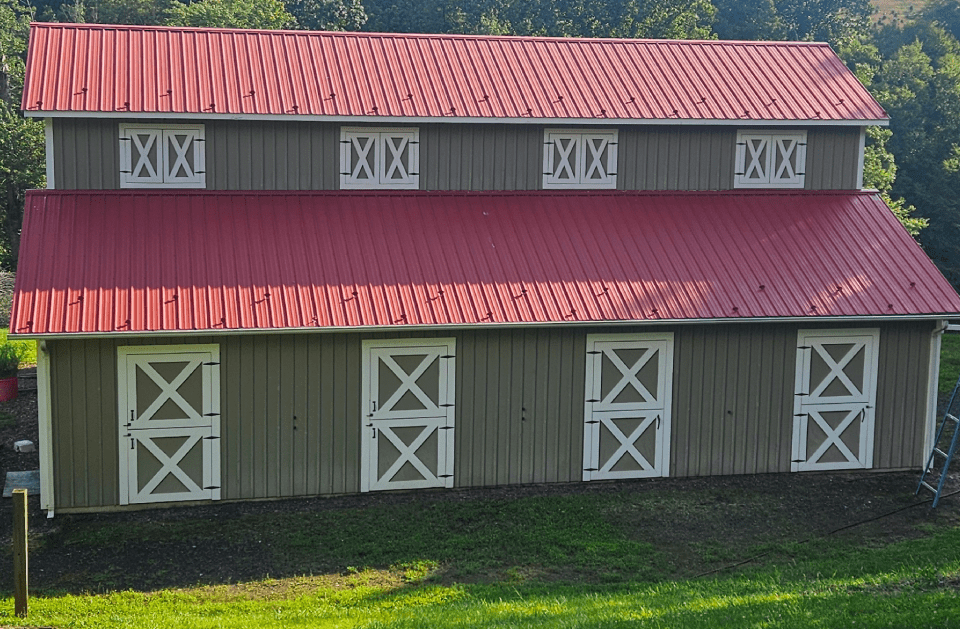
Metal roofing is the dominant roof material across a wide band of Southwest Virginia, and the accumulation patterns on those panels—oxidation chalking, lichen colonization, and algae streaking—are visible from the street in ways that accelerate if left unaddressed. Outdoor Elements has built metal roof cleaning into a primary service line specifically because the demand in the Marion area and surrounding communities reflects how common these roofs are and how poorly suited standard pressure washing is to cleaning them safely. The chemical system used is sodium hypochlorite-based, applied through a Soluforge delivery system that controls concentration and reach, followed by a light-pressure rinse once dwell time is complete—no high-pressure application at any point during the process.
Roof pitch and total square footage are the two variables that determine how a metal roof cleaning project is scoped and priced. Steeper pitches affect chemical application reach, safety logistics, and the time required to rinse panel seams completely, while square footage drives chemical volume. Both are assessed during the free estimate visit so that nothing about the project scope is uncertain before work begins.
Arrange a free estimate with Outdoor Elements to assess your roof's pitch, panel condition, and the extent of oxidation or biological growth before any cleaning begins.
How Metal Roof Cleaning Addresses Oxidation and Biological Growth
Sodium hypochlorite at the correct concentration is effective against lichen, algae, and biological surface growth because it disrupts the cellular structure of the organism rather than simply rinsing it off the panel face. On metal roofing, where lichen root systems (rhizines) attach directly to the panel coating and can pit the surface if pulled off mechanically, chemical dissolution is the appropriate removal method—not scrubbing, not high pressure. The Soluforge system allows concentration to be calibrated to the level of growth present: heavier lichen colonization on north-facing panels that retain moisture longer requires a different dwell approach than light algae streaking on south-facing exposed panels.
After the chemical dwell period and the light-pressure rinse, the panels return to their original factory color rather than the chalky gray or green-tinged tone that oxidation and biological growth produce over time. Panel seams and overlap edges—where buildup concentrates on corrugated profiles—clear back to clean metal, and ridge cap transitions show consistent color with the field panels rather than the darkened line that develops from moisture retention at those joints. Oxidation chalking, which produces a powdery white residue on older painted metal panels, lifts cleanly with sodium hypochlorite and rinse, restoring the surface gloss without abrasion.
Shingle roofing, if present on an adjacent structure or mixed-material roof section, is never rinsed with direct pressure—chemical-only treatment with natural rainfall rinsing is the appropriate method. Metal panels are rinsed with light pressure because their non-porous surface requires positive rinse confirmation that the chemical has been fully cleared from seams and panel faces. These are not interchangeable techniques, and Outdoor Elements does not apply the metal rinse protocol to shingle sections under any circumstance.
What Property Owners Ask About the Work
These questions address how metal roof cleaning is performed, what affects the approach on different panel types, and what the completed work looks like on roofs common across the Marion area and surrounding communities.
Why is sodium hypochlorite the preferred chemistry for metal roof cleaning rather than pressure alone?
Lichen attaches to metal panel coatings with root-like structures that mechanical pressure alone can tear rather than remove, leaving attachment points that allow rapid regrowth. Sodium hypochlorite dissolves those structures at the biological level, allowing the rinse to clear them without abrasion to the panel coating.
How does roof pitch affect the chemical application process on a standing seam metal roof?
Steeper pitches require the Soluforge system to be adjusted for application reach and coverage angle, because the chemical needs to contact the full panel face including seam edges and fastener points—not just the visible surface. Higher pitch also affects rinse sequence: water follows the panel slope, so rinse direction is planned to move residue toward the eave rather than across clean sections.
What does oxidation on a metal roof look like, and how does cleaning address it?
Oxidation presents as a chalky, powdery surface layer on painted metal panels, often appearing white or off-color compared to the original panel finish. Sodium hypochlorite lifts the oxidized layer during dwell time, and the light-pressure rinse removes it from the panel face, restoring the underlying coated surface to its original color.
How is the cleaning approach different for a Marion-area home with a steep corrugated metal roof versus a low-pitch standing seam panel?
Corrugated profiles have more surface geometry—ridges and valleys—where biological growth concentrates in the lower channels, so chemical dwell time is managed to ensure the entire profile is treated, not just the ridge tops. Low-pitch standing seam roofs present a more uniform surface but require careful rinse management at the seam locks, where sodium hypochlorite can pool if rinse pressure and angle aren't directed correctly.
How do you confirm the rinse is complete on a metal panel roof before leaving the site?
Rinse confirmation on metal requires visually checking the panel seams, ridge cap edges, and eave transitions after the main rinse pass—these are the areas where residual chemistry collects and where incomplete rinsing would produce localized discoloration or surface reaction over time. A secondary rinse pass on seam lines is standard before the job is marked complete.
Outdoor Elements also performs metal roof cleaning in Abingdon, Wytheville, Bristol, and the West Jefferson and Boone areas. To schedule an estimate for your metal roof based on its pitch, panel type, and current surface condition, call Outdoor Elements at (276) 247-9587.