
Stains on Masonry That Require the Right Remover
Concrete, stone, and brick cleaning in Marion for mineral deposits, organic staining, and embedded surface contamination
Not every stain on concrete, stone, or brick responds to water pressure. Red clay tracked into a concrete driveway, rust streaking down a brick facade from a corroding metal fastener, oil from a vehicle parked in the same spot for years—each of these requires a specific chemical remover formulated for that contamination type, applied before any rinse. Outdoor Elements selects cleaning chemistry based on the stain type and the substrate material, which determines both the chemical composition used and whether a soft wash application or a pressure rinse is appropriate for the final step.
The base cleaning agent is sodium hypochlorite for biological contamination—algae, mold, and mildew on concrete and stone—but specialty removers handle the categories that bleach does not address: red clay staining common on driveways throughout the Marion area, graffiti, oil and grease deposits, and rust. Gray headstone cleaning uses a separately formulated specialty chemical designed to lift biological growth and mineral staining without etching the stone surface. The material being cleaned drives chemical selection, and that selection happens before any water is applied.
Contact Outdoor Elements to describe the staining on your concrete, stone, or brick surface and get a direct assessment of what cleaning approach your specific material requires.
The Difference Between Surface Cleaning and Stain Removal
Pressure washing removes loose surface debris and light biological film, but it cannot extract contamination that has penetrated the porous structure of concrete or brick. When staining agents—mineral salts, iron oxide from rust, petroleum from oil—have entered the pore structure of the material, they must be drawn out or chemically converted before rinsing. Outdoor Elements applies the appropriate specialty remover, allows it to dwell and react with the contamination, and then uses soft wash or light pressure rinse depending on what the material can tolerate. Brick and older stone are assessed for mortar condition before any pressure is applied, because deteriorating mortar is damaged by pressure that the brick face itself handles without problem.
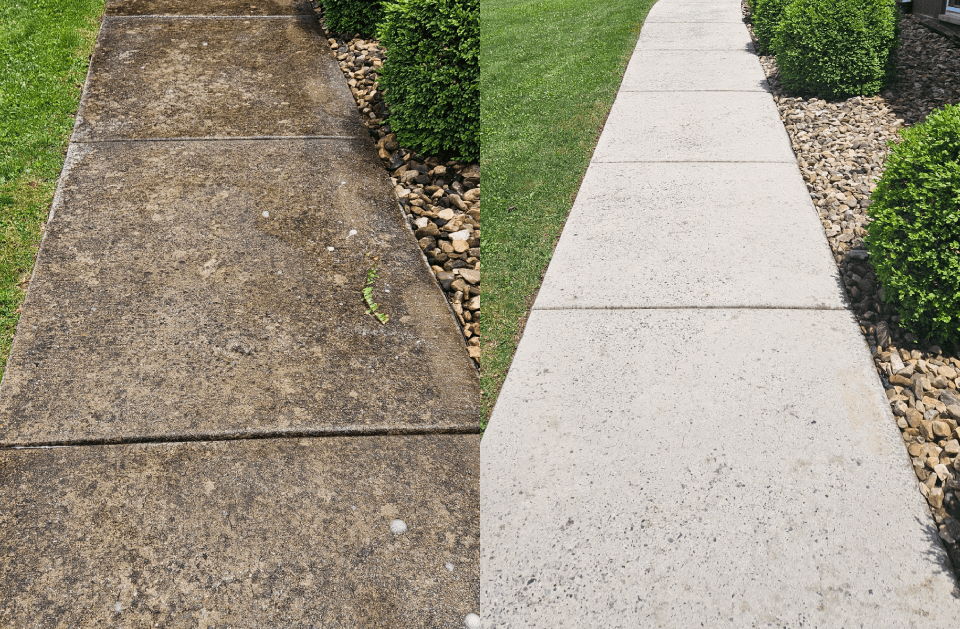
After cleaning, concrete surfaces show their original aggregate color without the grey-green biological film or brown-orange clay staining that had accumulated. Brick facades cleaned of efflorescence—the white mineral salt deposits that migrate to the surface as moisture moves through the wall—reveal the original fired color of the brick without the chalky surface coating. These are visible, immediate changes that confirm the chemical treatment reached and addressed the contamination rather than rinsing around it.
Commercial brick facades in Marion's older downtown buildings and residential driveways in neighborhoods like Holly Brook present different cleaning challenges: commercial brick often has decades of efflorescence and biological layering, while residential concrete driveways frequently combine red clay intrusion with oil staining in the same surface area. Each situation is assessed individually because combining incompatible removers or applying the wrong chemistry to a specific stain type can fix one problem while setting the other more firmly into the surface.
Questions Before Starting Your Project
Masonry cleaning raises specific questions about how different stain types are treated, what pressure is appropriate for different materials, and what the surface will look like once the work is done. The answers below address the service itself and the decisions made during the job.
How is the correct cleaning chemical selected for a specific stain on concrete or brick?
The stain type is identified first—biological growth, mineral deposit, petroleum, iron oxide, or paint—because each requires a chemically different remover; applying a bleach-based solution to a rust stain, for example, can oxidize the iron further and darken the staining rather than lifting it.
What makes gray headstone cleaning different from standard concrete or brick cleaning?
Headstones are often softer stone—marble, limestone, or sandstone—that etches or erodes under acidic cleaners and pressure; the specialty formulation used is pH-balanced for biological removal without the chemical aggression that would pit or scratch the stone surface.
When is soft wash used instead of pressure rinse on masonry surfaces?
Soft wash is the appropriate method when the mortar between brick units shows erosion or cracking, when the stone surface has visible weathering or flaking, or when the staining is biological and chemical dwell time alone will break it down without needing water force to assist.
How does the construction era of Marion-area brick buildings affect how they are cleaned?
Brick laid before the mid-twentieth century was typically softer-fired and more porous than modern brick, which means it absorbs cleaning chemicals more readily and requires lower pressure on the rinse step to avoid driving moisture deeper into the wall assembly or dislodging mortar that is already in marginal condition.
What should you look for in a finished concrete or brick cleaning to confirm the stain was fully addressed?
The treated area should show consistent color across the full surface without lighter or darker patches indicating where chemical coverage was uneven, and the surface texture should be unchanged—no etching on concrete or scoring on brick face—indicating the method matched the material.
Outdoor Elements also cleans concrete, stone, and brick in Wytheville and Abingdon. To get a free estimate based on your surface type and staining conditions, call Outdoor Elements at (276) 247-9587.