
Fences That Look Maintained, Not Neglected
Fence cleaning in Marion for surfaces showing oxidation, staining, or embedded grime
Outdoor Elements provides fence cleaning in Marion for homeowners dealing with surfaces that have turned gray, streaked, or coated with the kind of buildup that standard rinsing cannot remove. The work covers every common fence material—vinyl, wood, metal, hardy board, and stucco—and the cleaning method is matched to the surface rather than defaulted to high pressure across the board. That distinction matters when one fence line runs through two different materials, which is common on older rural properties in the Marion area where sections were replaced piecemeal over the years.
Before any cleaning begins, Outdoor Elements identifies the specific materials present on your fence and selects chemistry accordingly. Delicate surfaces like vinyl and stucco receive a soft wash application to avoid surface abrasion, while more durable materials like metal can tolerate a light pressure rinse. Wood surfaces often carry oxidation and tannin staining that require a specialty wood treatment to lift effectively rather than just wet the surface. Metal sections with visible rust receive a dedicated rust remover rather than a general-purpose wash that would leave the staining intact. Cleaning is applied through a soil-forge delivery system, and every surface is rinsed after treatment—the only exception being specialty shingle applications, which are designed to dwell.
Request a free on-site estimate to identify your fence materials and get a cleaning plan specific to what's installed on your property.
How Material-Specific Cleaning Produces Different Results
A fence made entirely of one material is straightforward to clean, but most residential properties have more complexity than that—metal posts with vinyl panels, wood sections adjacent to painted hardy board, or original materials with a later addition that used something different. Each combination changes which chemicals can safely be applied and at what concentration. Outdoor Elements evaluates the full fence line before selecting products, which prevents damage to softer materials from chemistry or pressure that was calibrated for something harder.
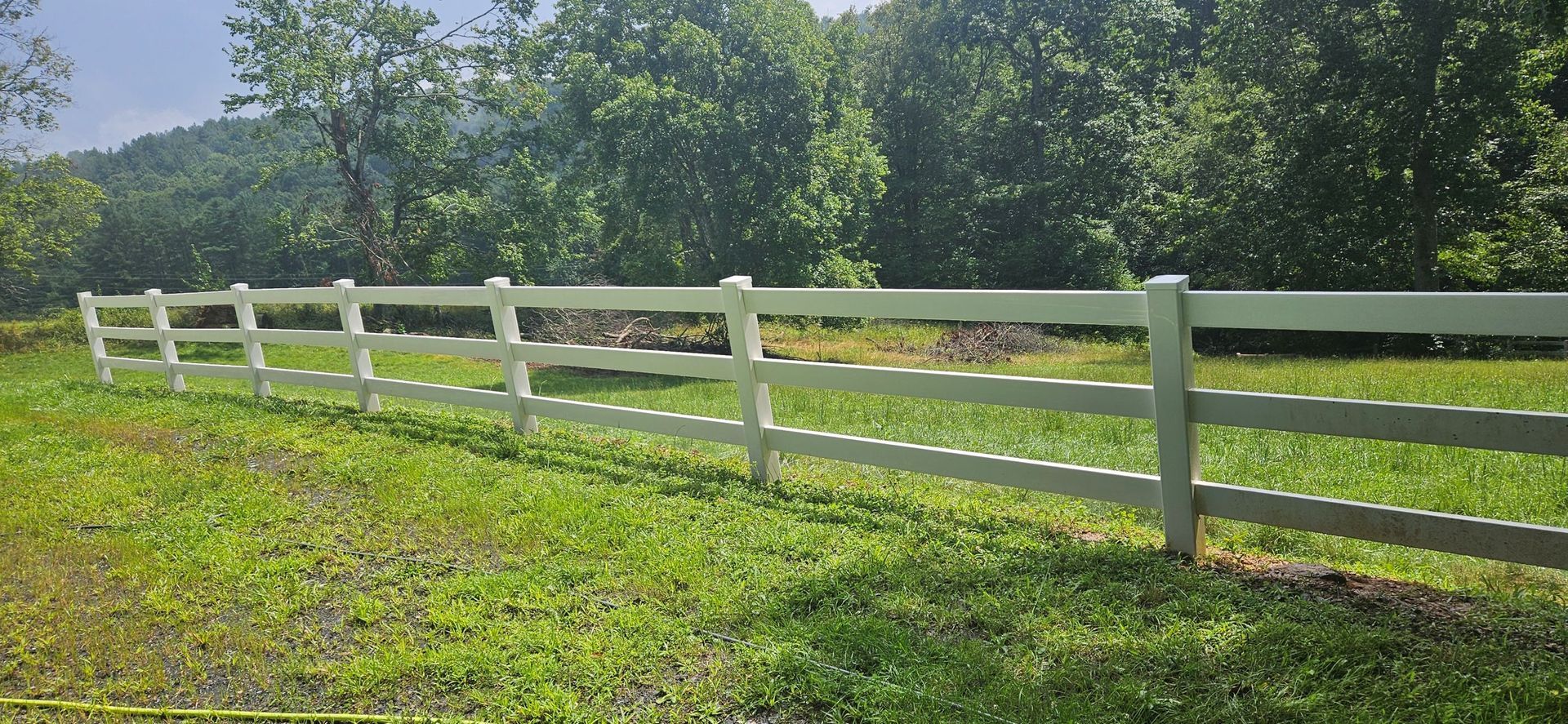
Once cleaning is complete, the visible difference is substantial. Vinyl that had turned chalky white or yellowed returns to its original color. Wood that had gone gray from oxidation shows its natural grain again rather than a flat, weathered surface. Metal that carried rust streaks comes out without that discoloration, and the surrounding areas where the rust had run down onto concrete or siding are addressed as part of the same process. The fence line looks consistent rather than spotted, which is the most common failure of single-method cleaning approaches.
Mineral deposits are a recurring issue on fences in this part of Southwest Virginia, where water sources can leave calcium and iron residue that bonds to porous surfaces over time. Addressing those deposits requires a different chemical than what removes organic growth or industrial dust, which is why material identification and chemistry selection happen before any water touches the surface—not after spotting results mid-job.
What Property Owners Ask About Fence Cleaning
These questions focus on how the cleaning work is actually performed and what affects the approach on different fence types and property configurations.
What happens during the property assessment before cleaning begins?
Before any equipment is set up, the fence material composition is identified across the entire line, including any sections that differ from the majority—Outdoor Elements uses that assessment to determine which chemical formulas are appropriate for each surface zone and whether soft wash or a light pressure rinse is the right delivery method.
How does soft washing differ from pressure washing on a fence surface?
Soft washing relies on chemistry applied at low pressure to break down grime, oxidation, and organic growth, while pressure washing uses mechanical force—for fence surfaces like vinyl or stucco where the coating or finish can be damaged by pressure, the chemical approach does the work that force would otherwise do without the risk of surface abrasion.
Why does wood fencing require a different cleaning product than vinyl or metal?
Wood carries oxidation and tannin compounds that general surfactants do not lift effectively, so a specialty wood formula is used to target those specific staining mechanisms rather than simply wetting the surface and rinsing.
What should you do to prepare your fence line before a cleaning appointment?
Clearing plants, decorative items, or anything attached to the fence that is not part of the structure itself makes the job more thorough—in Marion and the surrounding rural properties, that often includes removing any wire or twine that has been run through panels, which traps debris and holds it against the surface during cleaning.
How do you know when a fence surface has been cleaned properly rather than just wetted?
A properly cleaned fence shows consistent color across the full surface rather than lighter patches surrounded by residual staining—on metal, rust streaks should be fully gone rather than faded, and on wood, the grain should be visible and even rather than gray and flat in some sections.
Outdoor Elements also performs fence cleaning in Grayson, Wytheville, Abingdon, Chilhowie, and Bristol. To schedule an evaluation of your fence materials and get a cleaning plan specific to your property, contact Outdoor Elements at (276) 247-9587.