
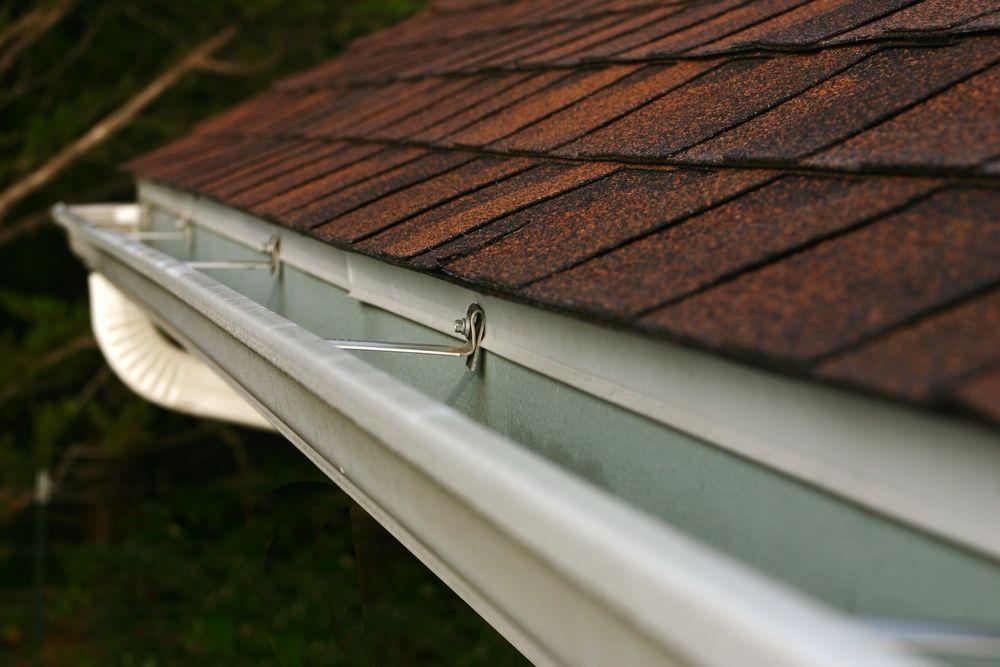
Gutters That Move Water Where It Belongs
Gutter cleaning in Marion for clogged, overflowing, or debris-packed systems on residential and commercial properties
A gutter system that has become blocked with packed debris no longer functions as drainage—it functions as a trough that holds water against the fascia board, overflows onto siding, and directs runoff toward the foundation rather than away from it. The damage that follows is not immediate and dramatic but slow and compounding: fascia boards absorb moisture and soften, soffit panels lose their backing, and ground saturation develops at the base of exterior walls. Outdoor Elements handles gutter cleaning as part of a broader exterior maintenance approach, identifying secondary damage that has developed alongside the blockage rather than clearing debris in isolation.
Gutter cleaning at Outdoor Elements is integrated with exterior siding service and pairs naturally with soffit and fascia inspection because those components share the same roofline and often show concurrent failure. Cleaning uses a light pressure rinse through the gutter run to confirm the downspout system is flowing freely after debris is removed—but the rinse pressure is calibrated to avoid bending gutter sections or dislodging hangers that are already under stress from the weight of debris that has been sitting in the channel. Where a soffit or fascia problem is found during the gutter work, that repair can be addressed as part of the same service visit.
Set up an exterior maintenance visit with Outdoor Elements to clear your gutters and identify any soffit or fascia conditions that need correction at the same time.
What Proper Gutter Cleaning Requires
Debris removal from a gutter system involves more than extracting the visible leaf pack from open channel runs. Downspout inlets are the most common point of blockage, and a compacted debris plug at the inlet can allow the channel to appear partially clear while the downspout is completely non-functional. Outdoor Elements flushes the full downspout run after clearing the channel to confirm water moves through the elbow and discharge without restriction. On properties in Marion where metal roofing is present—a common choice on both older rural structures and newer residential builds—the gutter system tends to carry higher water volume during heavy rain because metal roofing sheds water faster than asphalt shingles, which places greater demand on the downspout capacity and makes blockage a more consequential failure.
After cleaning, the gutters flow freely from channel to discharge and do not hold standing water in any section of the run. Sections that were previously overflowing at the front face of the gutter—visible as staining streaks on the siding below—will no longer produce that overflow once the blockage is cleared and the system is confirmed functional. The fascia board behind cleaned gutters also dries out over subsequent days, which is the observable change that prevents the slow moisture damage that packed, overflowing gutters cause to that structural component.
Gutter cleaning also surfaces information about hanger condition, gutter pitch, and joint sealing that may indicate the system needs maintenance beyond debris removal. Where hangers have pulled away from the fascia or gutter sections have separated at joints, Outdoor Elements identifies those conditions and can address them as part of the handyman maintenance scope rather than leaving them for a separate service call.
What Property Owners Ask About Gutter Work
Gutter cleaning questions center on how the work is sequenced, what gets inspected in the process, and how to tell whether the system is functioning correctly once the cleaning is done.
How is a downspout blockage cleared when the plug is located inside the vertical run rather than at the inlet?
A downspout plug that is not at the inlet requires either feeding water pressure from the top of the run to force the blockage through the elbow, or disassembling the elbow section to clear the obstruction manually, depending on where along the run the blockage has compacted.
What causes gutters to pull away from the fascia board even after debris is cleared?
Gutter hangers are typically spaced at intervals along the channel, and when the gutter has held heavy debris for extended periods, the combined weight exceeds what the fasteners were designed to carry and pulls them out of the fascia wood; if that wood has also softened from moisture, the hanger cannot be simply re-driven into the same location.
How does the roof type on a Marion-area property affect how often gutters need cleaning?
Metal roofing, common on both older farmstead structures and newer construction around Marion, sheds debris more efficiently than asphalt shingles but delivers water to the gutter system at a faster rate, which means any partial blockage becomes a functional failure more quickly than on a comparable asphalt-shingled structure.
What is checked during a gutter cleaning to confirm the system is functioning rather than just visually clear?
After debris removal, a flush test runs water from the high end of the channel run and confirms it exits at the downspout discharge at the expected volume and speed; slow drainage after flushing indicates a partial blockage or pitch issue that still needs to be corrected.
How do you identify that a gutter cleaning is needed before overflow damage has already occurred?
The earliest indicator is granule accumulation at the base of downspouts after a rain event, which means the gutter system is not draining and water is sitting long enough to carry shingle granules through; the second indicator is water marks or staining on siding directly below a gutter section where overflow is occurring.
Outdoor Elements also performs gutter cleaning in Wytheville, Abingdon, Bristol, and Saltville. For a free estimate on gutter clearing and any associated soffit or fascia work, call Outdoor Elements at (276) 247-9587.