
Stain Removal That Gets Into the Surface
Driveway cleaning in Marion for concrete, stone, and brick surfaces with oil staining, rust deposits, and deep-set discoloration
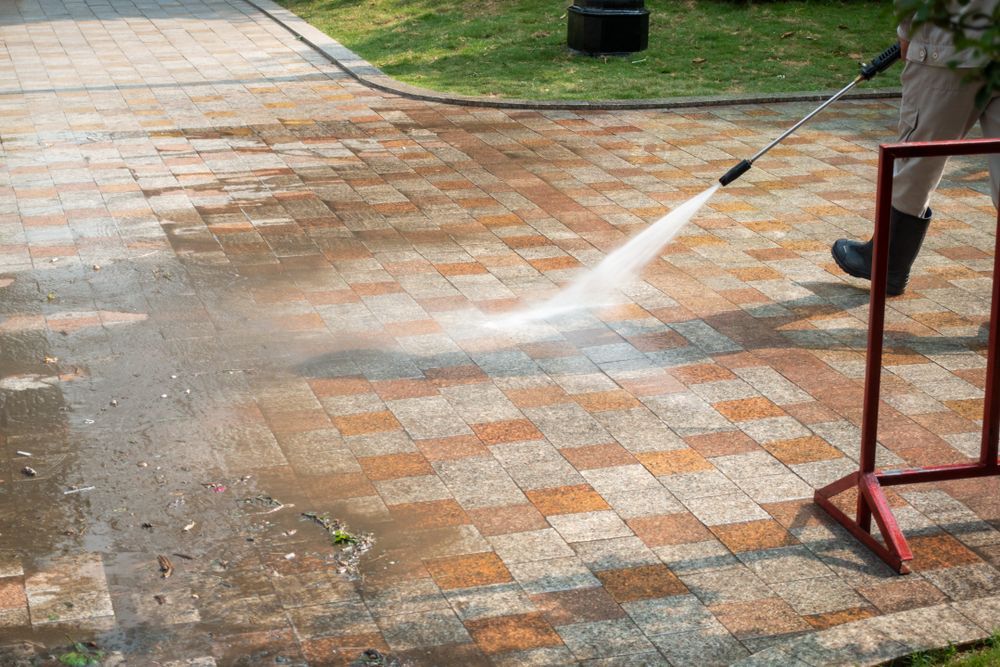
Oil staining, rust transfer, and red clay discoloration don't sit on top of concrete—they bond into the open pore structure of the surface, which is why a standard pressure wash moves surface dirt but leaves the stain outline intact. Outdoor Elements carries a dedicated specialty chemical inventory for driveway cleaning in Marion that targets each of these conditions specifically: separate formulations for petroleum-based oil stains, iron oxide rust deposits, and mineral-based red clay accumulation. The Soluforge delivery system applies those chemicals at controlled concentration before any pressure rinse touches the surface, which is what allows the chemistry to do the actual work of breaking down the stain rather than just rinsing the face of the slab.
Concrete, stone, and brick all respond differently to pressure during the rinse phase. Brick with aged mortar joints is more vulnerable to pressure erosion than poured concrete, and natural stone sealed with a penetrating sealer needs a lower rinse pressure than unsealed concrete to avoid pulling the sealer out of the surface pores. The material drives the rinse setting—not a fixed number that works well enough on everything. Free estimates include a surface assessment to identify what's present and which specialty chemicals are appropriate before work begins.
Set up a driveway evaluation with Outdoor Elements to identify which stain types are present and what the cleaning process will involve for your specific surface.
What Driveway Cleaning Actually Accomplishes
The core process involves applying the correct specialty chemical to the driveway surface, allowing adequate dwell time for the formulation to penetrate and react with the specific stain compound, then rinsing with light pressure calibrated to the surface material. Oil stain remover works by emulsifying the petroleum compounds that have bonded into the concrete pore structure so the rinse can carry them off the surface. Rust remover uses an acidic formulation to dissolve iron oxide deposits without etching the surrounding concrete, which is why timing and dilution matter—the same chemistry that clears rust can pit concrete if it dwells too long at too high a concentration.
After the cleaning is complete and the surface has dried, the change is specific and visible: oil stain outlines that persisted through previous washes are reduced or eliminated, rust shadow staining around downspout drainage points clears back to the concrete's base color, and red clay tracking—common from unpaved portions of driveways and side yards around Marion-area properties—lifts to reveal consistent slab color across the full driveway surface. Brick and stone surfaces show grout line clarity and surface texture that had been obscured by biological growth and embedded sediment.
Not every stain responds equally to a single application. Deep-set oil stains that have cured into concrete over multiple seasons may require a second treatment pass, and that possibility is identified during the estimate review rather than after the first treatment. What the scope covers is the driveway surface itself; adjacent landscaping or vehicle surfaces are protected during the cleaning process but are not part of the cleaned area.
Common Questions About How the Work Is Done
These questions address the process specifics and material considerations that affect driveway cleaning on concrete, stone, and brick surfaces in the Marion area.
Why does oil stain removal require a specialty chemical rather than standard pressure washing?
Petroleum-based stains bond into the open pore structure of concrete during the curing process, and pressure alone can't break that bond—it removes surface-level dirt but leaves the stain compound embedded. An emulsifying chemical formulation breaks down the petroleum bond first, which then allows the rinse to carry the material off the surface rather than redistributing it.
How is the rinse pressure set differently for brick driveways versus poured concrete?
Brick driveways, particularly those laid with lime-based mortar in older Marion-area properties, are more vulnerable to mortar joint erosion under high-pressure rinse than modern poured concrete slabs. Rinse pressure on brick is kept lower and the angle is adjusted to avoid directing the stream directly into mortar joints, which preserves the joint integrity while still clearing surface contamination.
What does rust staining on a concrete driveway typically indicate about the source?
Rust deposits on concrete near downspouts, HVAC pad edges, or metal gate hardware typically come from iron-bearing runoff that contacts the surface repeatedly in the same location. Treating the stain removes the deposit, but if the iron source remains—a corroding downspout bracket, for example—the staining will return over time.
How does dwell time for the specialty chemical affect the cleaning result?
Dwell time is the period between chemical application and rinse, and it directly affects how thoroughly the formulation can react with the stain compound. Too short a dwell time leaves the chemical's work incomplete; too long a dwell on acid-based rust removers can etch surrounding concrete. Outdoor Elements monitors dwell actively rather than setting a timer and moving on.
What should you look for after the driveway has dried to confirm the cleaning was complete?
A fully cleaned concrete surface shows consistent color across the full slab without residual stain outlines at high-traffic zones or entry points. Red clay discoloration, if treated, clears back to the concrete's gray or tan base tone. Any remaining shadow at a previously stained area indicates a second treatment pass is needed on that section.
Outdoor Elements also performs driveway cleaning in Wytheville, Abingdon, and Bristol. To get a surface assessment and no-cost estimate for your driveway, call Outdoor Elements at (276) 247-9587.